Location Vosges
Résidence des Buis
Locations individuelles de 2 à 8 personnes et gîte de groupe jusqu'à 42 ou 49 personnes (réunions de familles, anniversaires, séminaires,...)
4 langues parlées (Français, Anglais, Allemand, Espagnol)


La région des Vosges
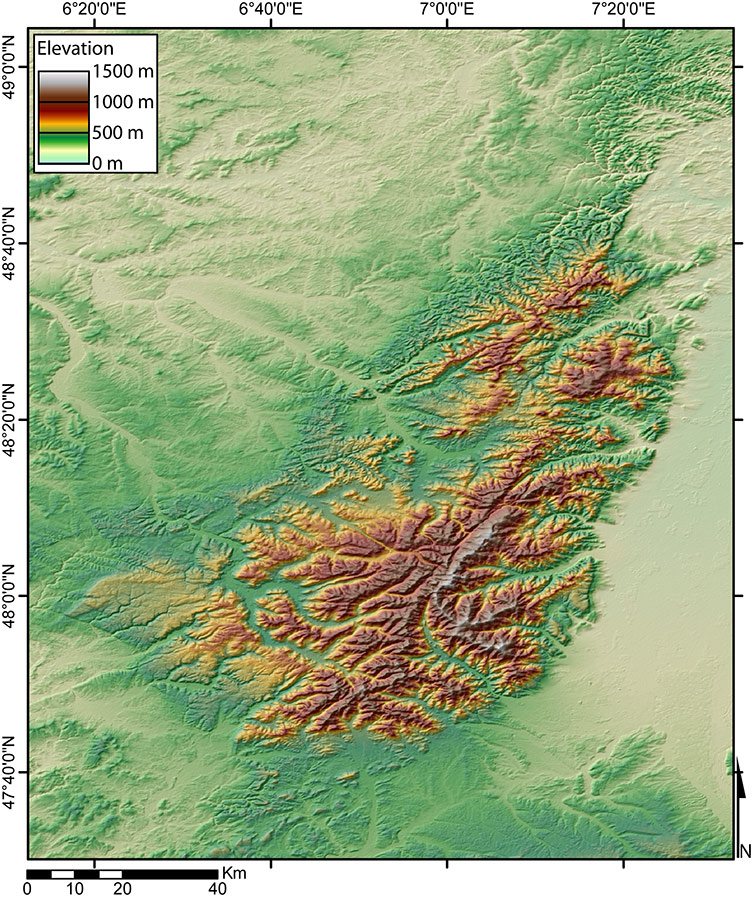
Les Vosges (Vogesen en allemand) sont un massif montagneux situé au nord-est de la France marquant la frontière naturelle entre la Lorraine et l'Alsace. Son nom vient du dieu antique Vosegus, et il l'a transmis au département lorrain des Vosges.
Son point culminant est le Grand Ballon (autrefois Ballon de Guebwiller) qui atteint 1 424 mètres d'altitude. Le terme ballon est le nom usuel des montagnes des Vosges, pour des raisons sans doute plus mystérieuses qu'il n'y paraît.
Le sud du massif fait partie du Parc naturel régional des Ballons des Vosges tandis que l'extrémité septentrionale constitue le Parc naturel régional des Vosges du Nord.
Les 14 sommets vosgiens de plus de 1 300 m sont :
- le Grand Ballon (1 424 m)
- le Storkenkopf (1 366 m)
- le Hohneck (1 363 m)
- le Kastelberg (1 350 m)
- le Klintzkopf (1 330 m)
- le Rothenbachkopf (1 316 m)
- le Lauchenkopf (1 314 m)
- le Batteriekopf (1 311 m)
- le Haut de Falimont (1 306 m)
- le Gazon du Faing (1 306 m)
- le Rainkopf (1 305 m)
- le Gazon de Faîte (1 303 m)
- le Ringbuhl (1 302 m)
- le Soultzereneck (1 302 m)
Liste à laquelle s'ajoutent d'autres sommets notables :
- le Petit Ballon (1 272 m)
- le Markstein (1 265 m)
- le Ballon d'Alsace (1 247 m)
- le Ballon de Servance (1 216 m)
- le Drumont (1 200 m)
- le Molkenrain (1 123 m)
- le Champ du Feu (1 099 m)
- le Donon (1 009 m)
- le Climont (965 m)
- le Vieil Armand (856 m)
Étymologie de « ballon »
Le terme ballon est le nom usuel des montagnes des Vosges. Le bon sens attribue volontiers cette dénomination à la forme de ces sommets arrondis par l'érosion. Cette version est cependant contredite par la traduction allemande, Belchen, et deux hypothèses sont considérées :
- une référence au culte celtique de Belenos - dieu du soleil - qui fut célébré jadis sur les éminences les plus dégagées du massif;
- un oiseau, le foulque - justement nommé Belchen en allemand - dont la petite calotte blanche sur le crâne peut évoquer les chaumes sommitales recouvertes de neige.
Sports d'hiver
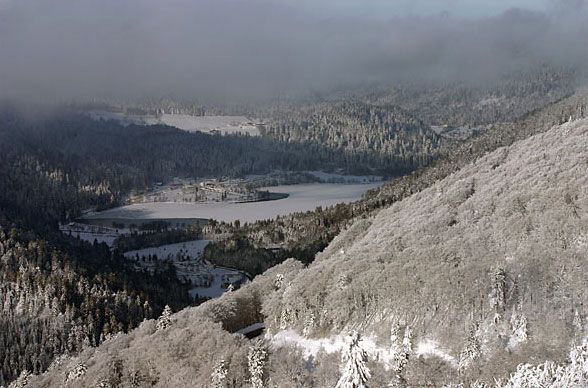
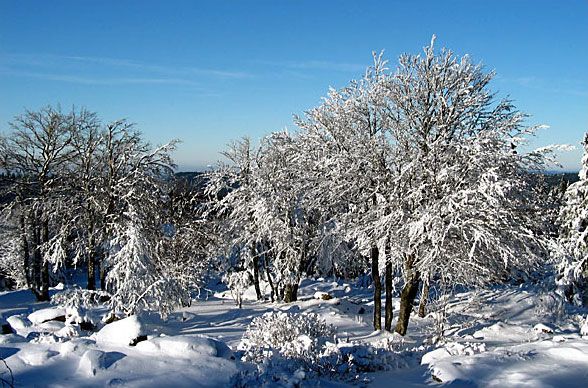
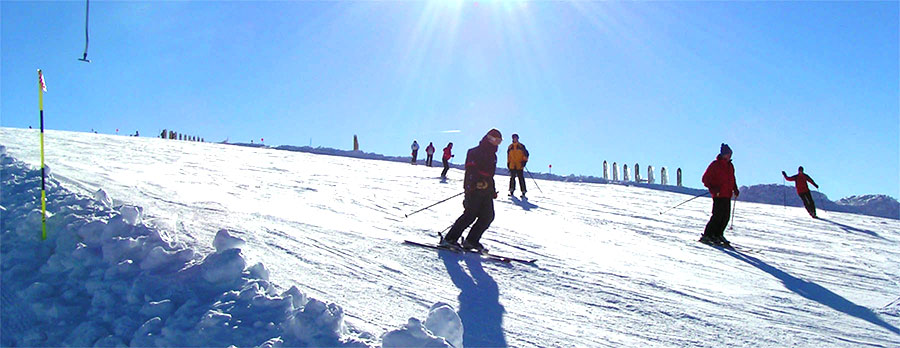 Quelques stations de ski dites de moyenne montagne parsèment le massif, notamment dans sa partie méridionale, où le relief est plus élevé. La plus importante de ces stations, en termes d'étendue du domaine skiable et de fréquentation est celle de La Bresse, dite La Bresse-Hohneck (900-1350 m.) qui représente le plus grand domaine skiable du Nord-Est de la France : 220 hectares, 37 pistes, 282 canons à neige et 1 Snowpark.
A noter aussi la station de ski de Ventron possédant un domaine convivial rassurant pour les débutants et les enfants, mais aussi sportif pour les bons skieurs et les audacieux. Sensations et beaux panoramas, le Ski Plaisir mais aussi le Ski Sécurité !
Cette station est extrêmement accessible aux personnes qui louent un gîte dans la Résidence des Buis puisqu'elle se situe seulement à 3km de celle-ci. Et pour encore plus de confort, plusieurs navettes gratuites par semaine sont proposées depuis la place du village jusqu'au domaine skiable !
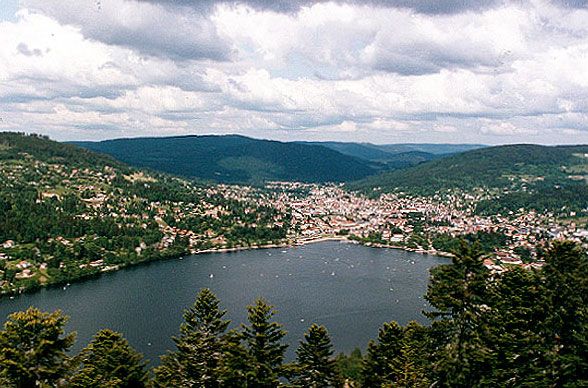
Non-loin également de la résidence, se situe la station de Gérardmer qui permet la pratique du ski à tout niveau avec ses 40 km de pistes sécurisées, ses 2 télésièges, ses 18 téléskis...
Du côté alsacien, il peut être notamment fait état de la station du Markstein, qui accueilla la coupe de France de saut à ski de 1955 et des épreuves de la coupe du monde de ski en 1983 et 1987.
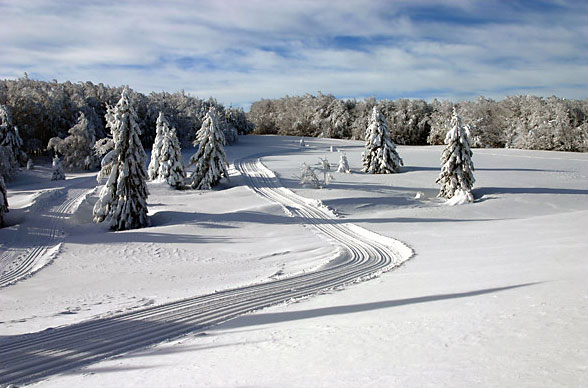
La pratique du ski de fond et depuis les raquettes est par ailleurs très répandue sur les crêtes vosgiennes.
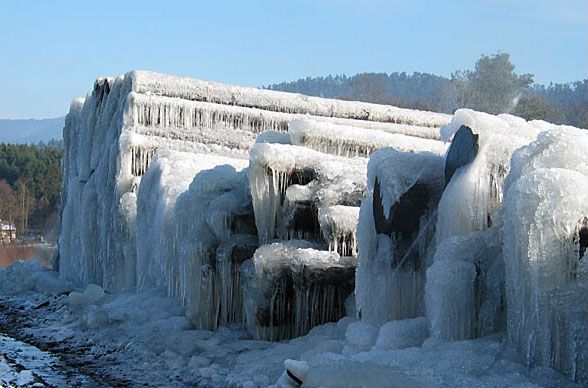
A noter que la pratique de l'alpinisme hivernal est possible sur les pentes nord du Hohneck, dans la zone des Spitzkopf et de manière générale sur les pentes alsaciennes du massif vosgien. On trouvera également de jolis secteurs pour la cascade de glace autour du Lac blanc.
Le Parc naturel régional des Ballons des Vosges
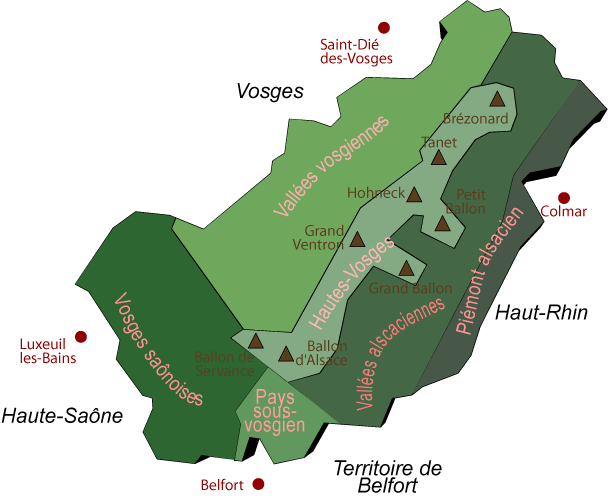 Le Parc naturel régional des Ballons des Vosges a été créé en juin 1989. Groupant 208 communes d'une population totale de 256 000 habitants, il est à cheval sur quatre départements : Haut-Rhin, Haute-Saône, Vosges et Territoire de Belfort. Ses 3000 km² en font l'un des plus vastes de France. Le parc englobe le sud du massif vosgien, depuis la vallée de Sainte-Marie-aux-Mines jusqu'aux portes de Belfort et de Luxeuil-les-Bains et s'organise autour des Hautes Vosges, la partie la plus élevée du massif. C’est l’un des plus grands et des plus peuplés des parcs naturels régionaux français. Comme tout autre Parc naturel régional, la mission du Parc des Ballons des Vosges consiste à rechercher un équilibre permanent entre protection des patrimoines naturel et culturel, et développement local.
Flore
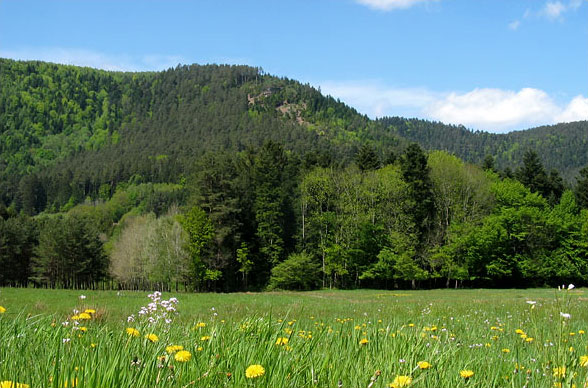
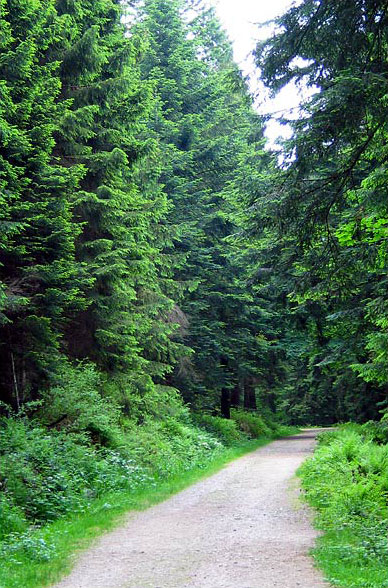
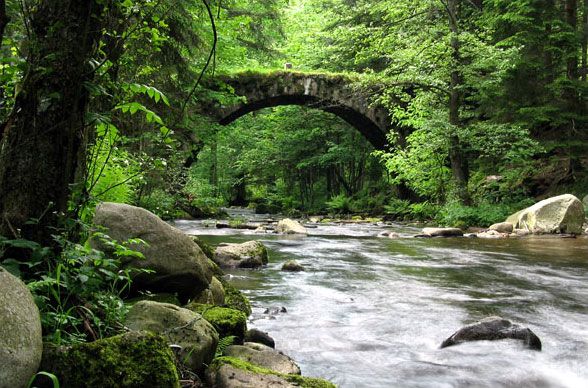
Le Parc englobe des espaces diversifiés comme les Hautes-Vosges et leurs versants boisés, les vallées vosgiennes, haut-rhinoises et comtoises, le plateau des mille étangs, le pays sous-vosgien et le piémont viticole alsacien. Il recèle également des milieux naturels rares, tels que les hautes-chaumes, les tourbières, les hêtraies-sapinières, les forêts collinéennes de chênes et de hêtres, les pelouses calcaires, les cours d’eau, les lacs et les étangs.
Cinq réserves naturelles participent ainsi à la protection de ces milieux les plus prestigieux de la grande crête.
- Plantes des tourbières
- Plantes médicinales : arnica, digitale
- Résineux
Patrimoine
Fortement marqué par une présence humaine ancienne, le Parc naturel régional des Ballons des Vosges est un territoire vivant, dont l'homme a su très tôt exploiter l'eau, le bois, la pierre et le sous-sol pour développer l'industrie et l’artisanat. Il est également l'héritier d'une histoire mouvementée liée aux conflits mondiaux.
L’industrie ancienne du sud du massif vosgien fut rurale et étroitement liée aux conditions géographiques. Les nombreux cours d’eau, la richesse du sous-sol (argent, cuivre, fer, cobalt, …) et du sol (granit, grès, …), la densité des forêts furent autant d’éléments favorables à la naissance de l’industrie et de l’artisanat. La roue à eau, du Moyen Age jusqu’au milieu du XIXe siècle puis la turbine et la vapeur en furent le moteur.
D’autre part, les guerres ont fortement marqué le massif vosgien et ont laissé des traces toujours présentes. Reflets tenaces ou facettes plus insolites de l’histoire, les lieux de mémoire contribuent à la connaissance de notre territoire.
Une soixantaine de musées, sites patrimoine (moulins, haut-fer, galeries de mines, etc.), circuits historiques et centres d’interprétation animés par des associations et acteurs locaux vous invitent à découvrir la richesse des patrimoines du Parc. Des thèmes d’une grande variété y sont traités : de la forêt à l’agriculture et aux savoir-faire, en passant par les patrimoines industriels et techniques, à l’art et l’histoire et enfin la mémoire.
Économie
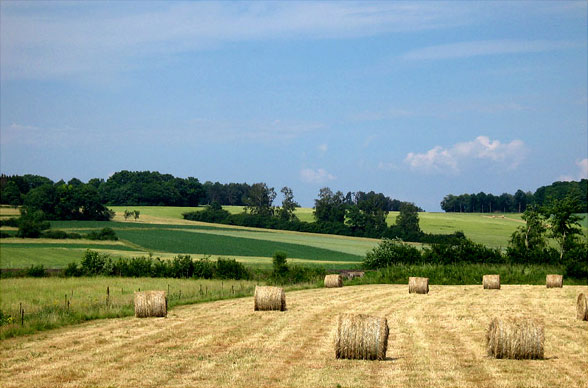
- L'agriculture de montagne
- La viticulture
- La distillation du kirsch
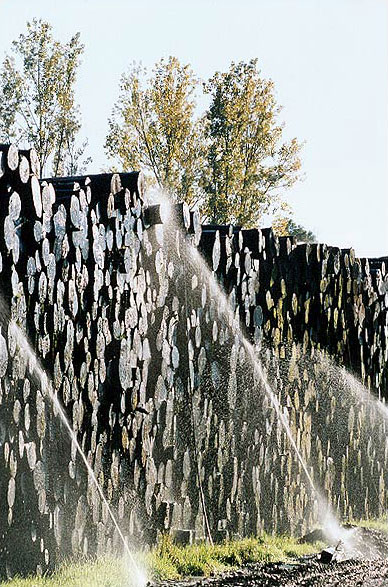
- La filière bois
- L'exploitation du granit
- L'industrie textile
- Le tourisme
- Le thermalisme
En savoir plus :
Site officiel du Parc naturel régional des Ballons des Vosges : www.parc-ballons-vosges.fr
Faune et flore
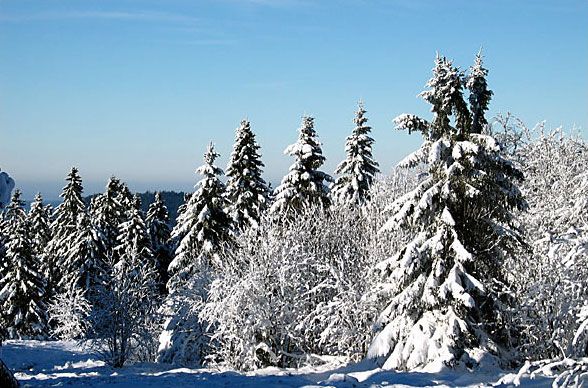
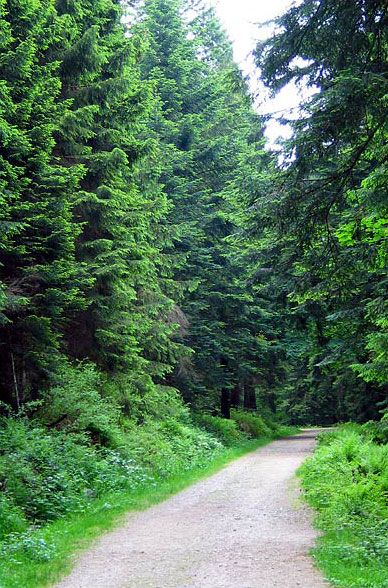
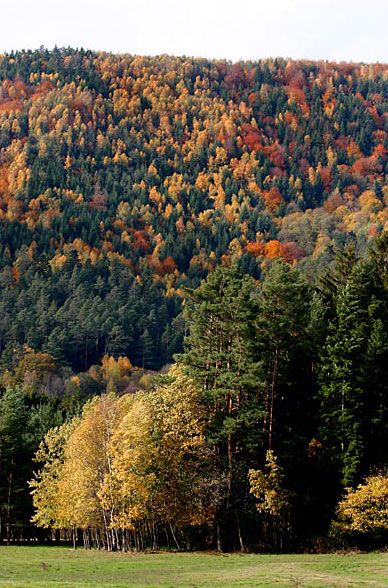
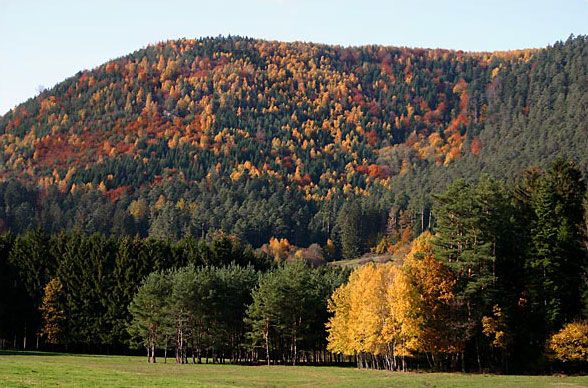
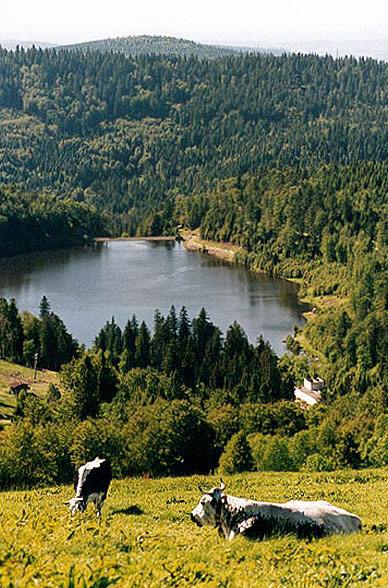 La végétation des Vosges est dominée par les résineux, épicéas, pins et sapins, plus fréquents que les hêtres et les chênes.
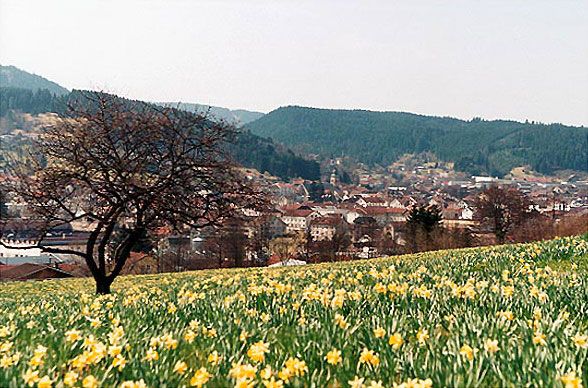
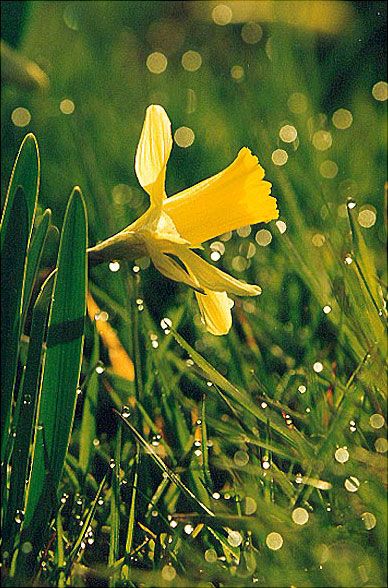
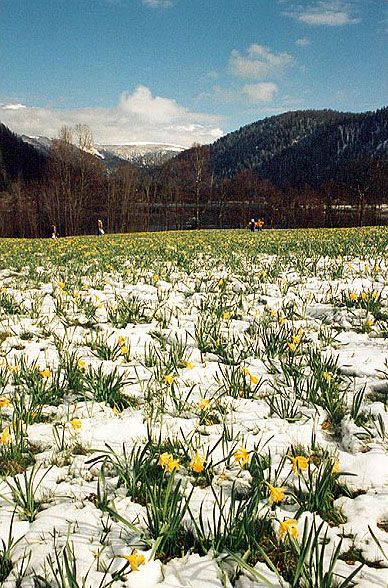
Les deux emblèmes du massif sont la myrtille, communément appelée brimbelle, dont la fameuse tarte est au menu de tous les restaurants de la région, et la jonquille fêtée tous les printemps à Gérardmer.
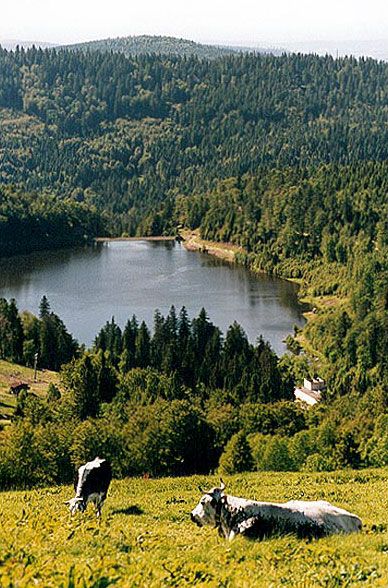
L'agriculture traditionnelle est vivrière : pomme de terre, seigle, vergers. Elle se complète d'élevage ovin et bovin, notamment - dans les pâturages les plus montagneux - la race vosgienne dont le lait est à la base du munster.
La forêt abrite de grands animaux, cerfs, chevreuils et sangliers. Le chamois et le lynx ont été réintroduits, mais l'animal symbole des Vosges reste le grand tétras, aujourd'hui menacé d'extinction. Parmi les autres oiseaux, les rapaces sont nombreux, buses, chouettes, hiboux ... ainsi que le pic noir, la fauvette, le faisan, etc.
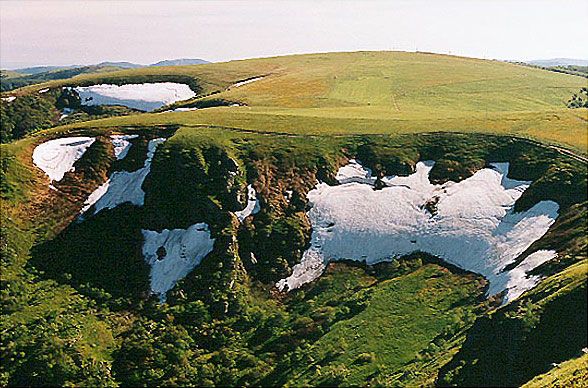
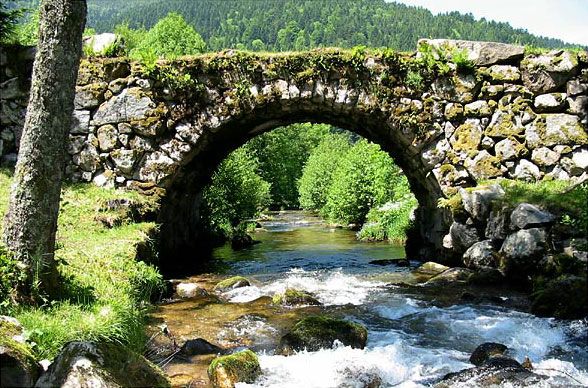
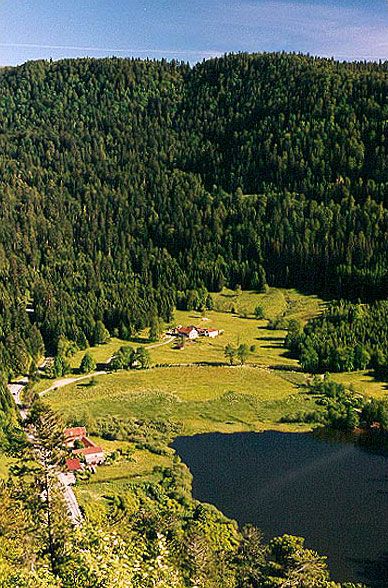
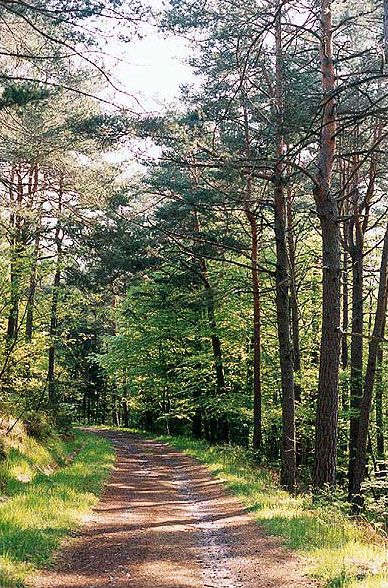
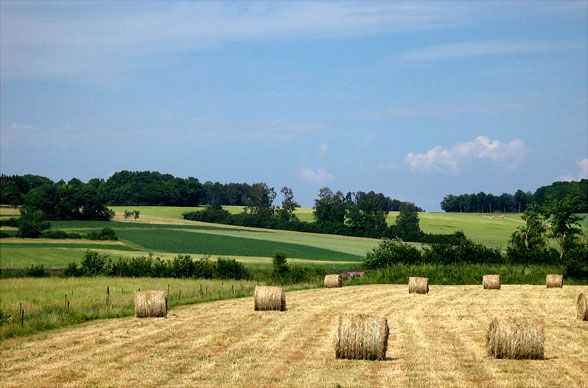
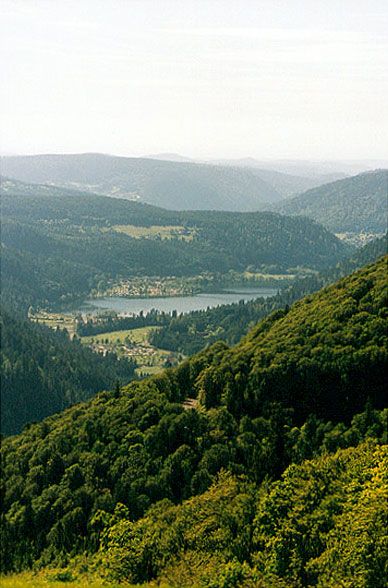
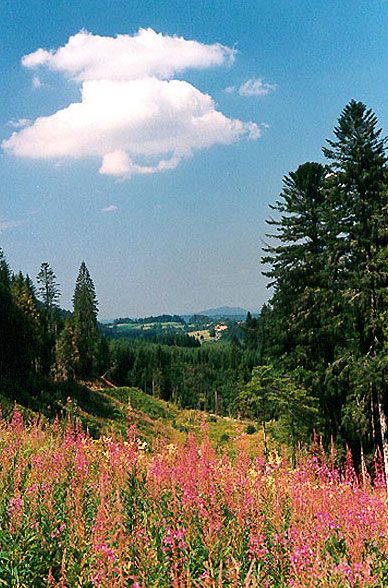
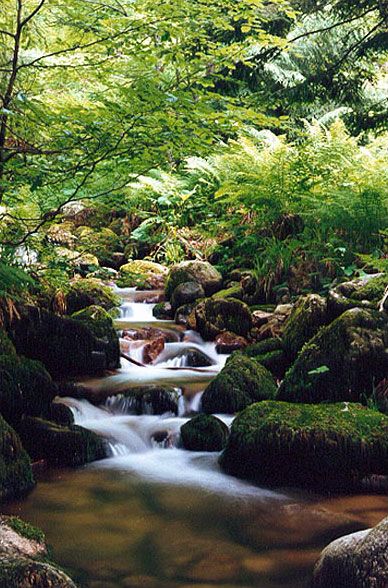
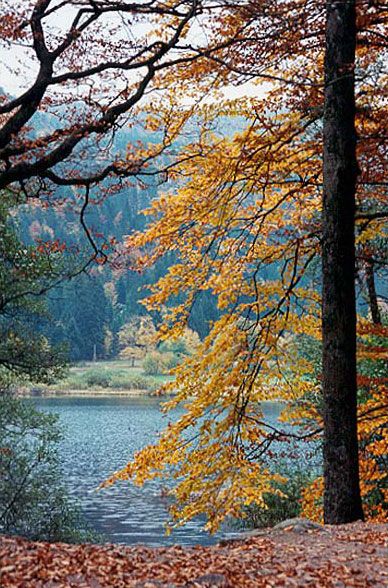
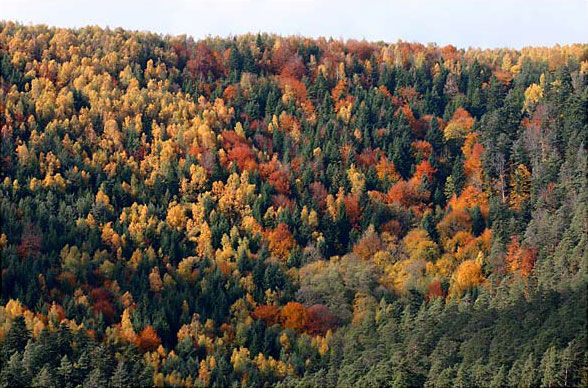
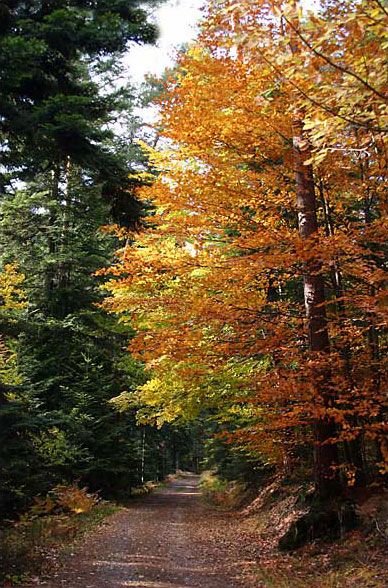
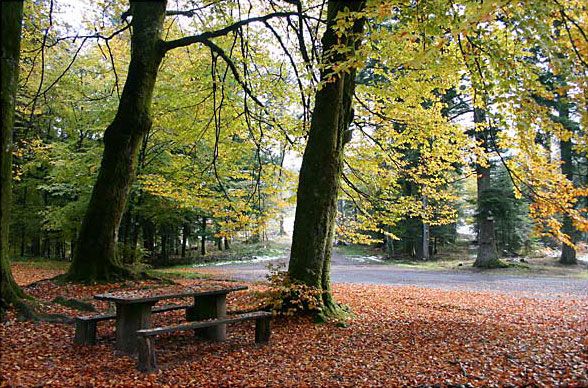
Quelques photos des Vosges
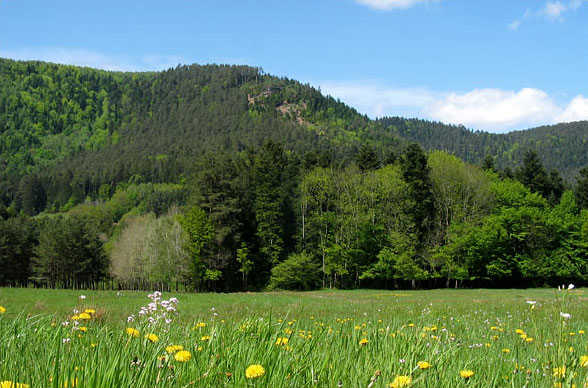
Printemps
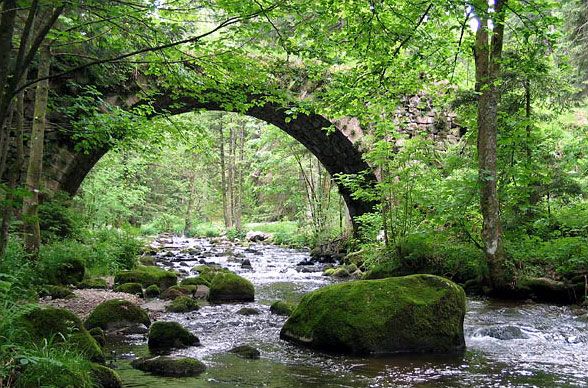
Été
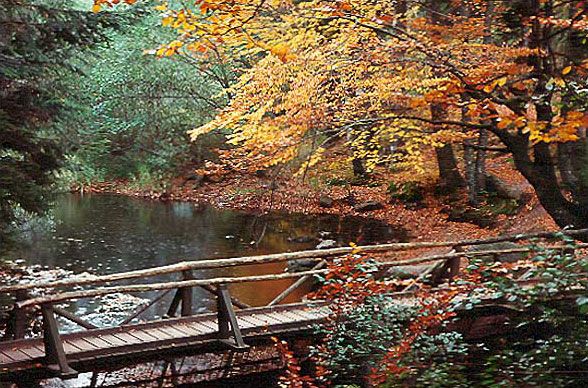
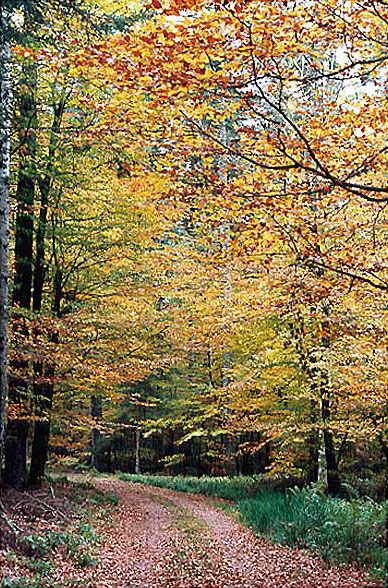
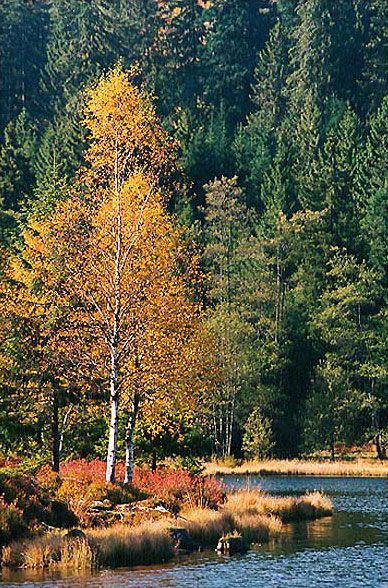
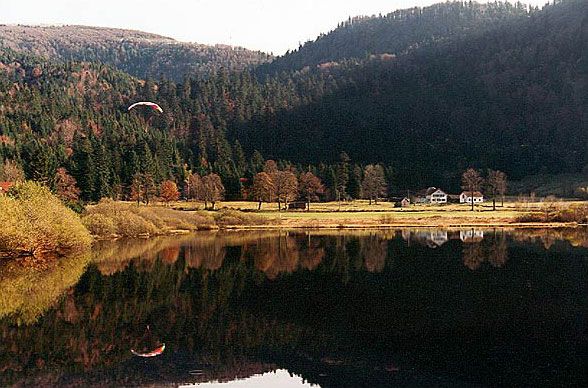
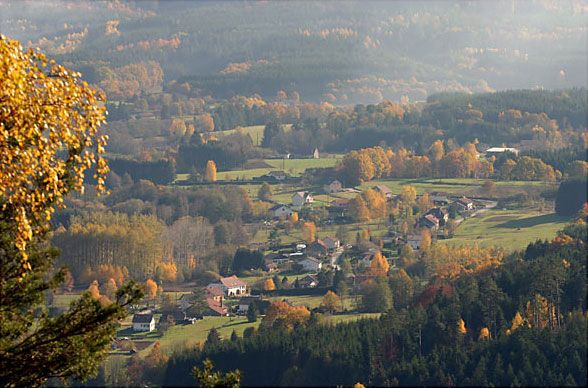
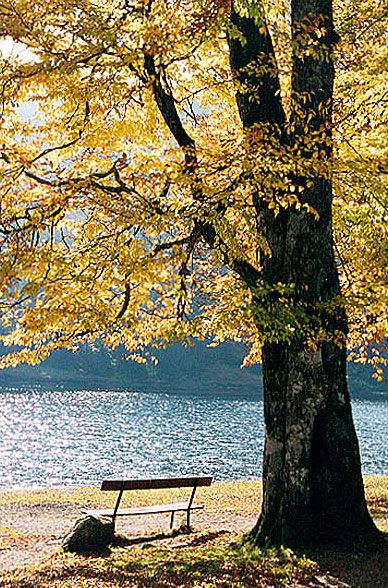
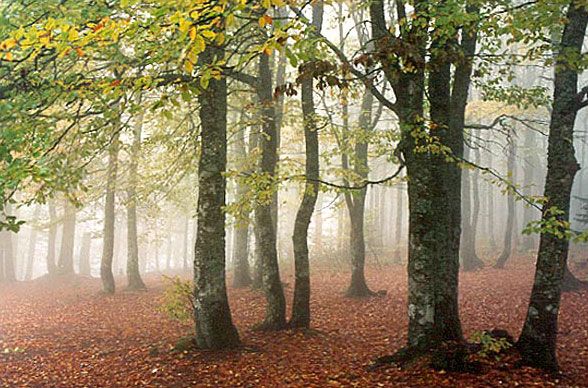
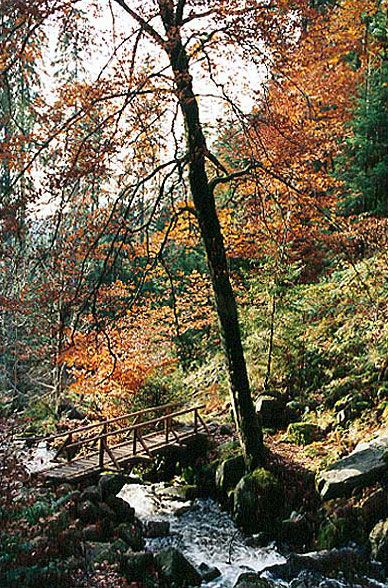
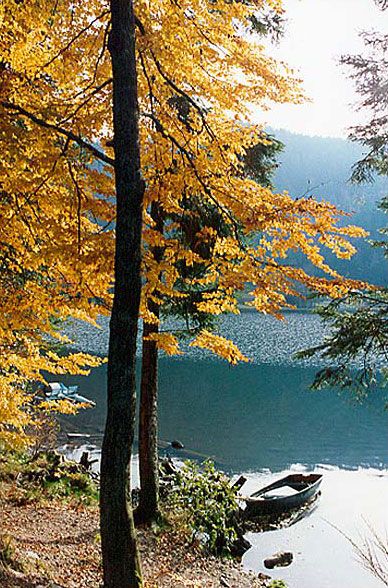
Automne
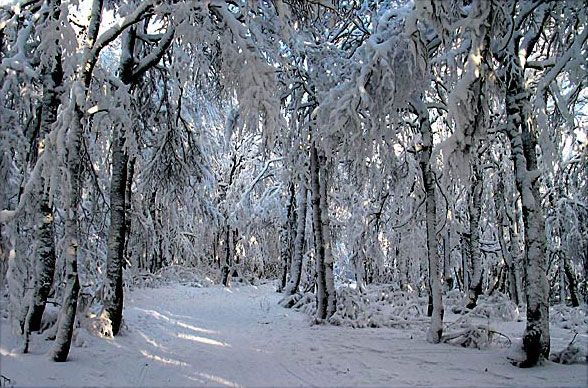
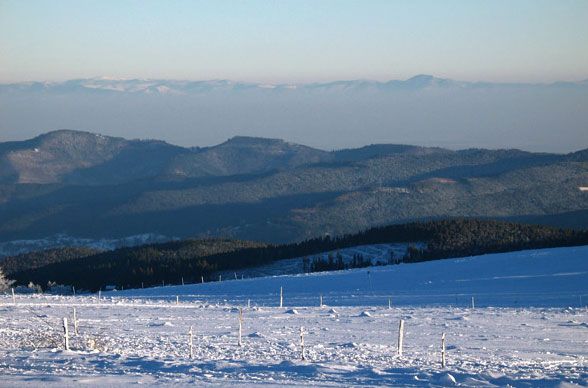
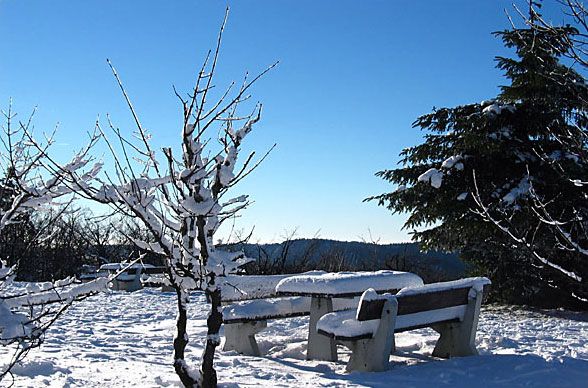
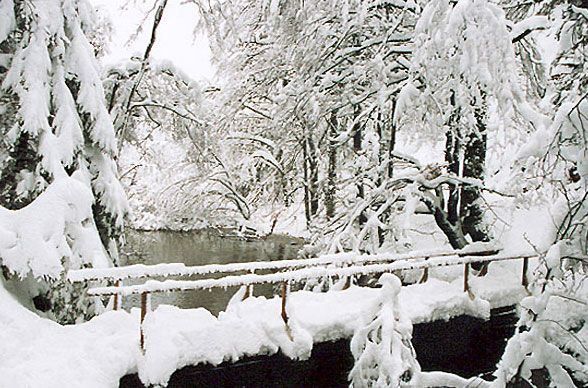
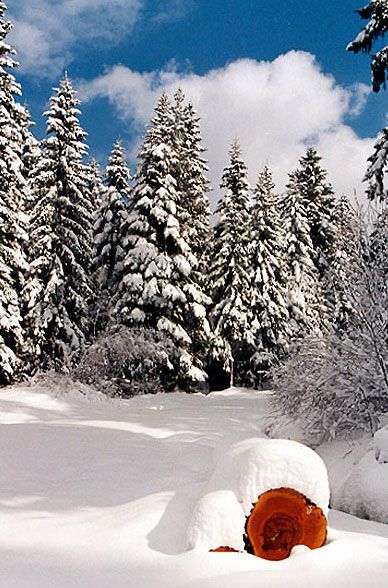
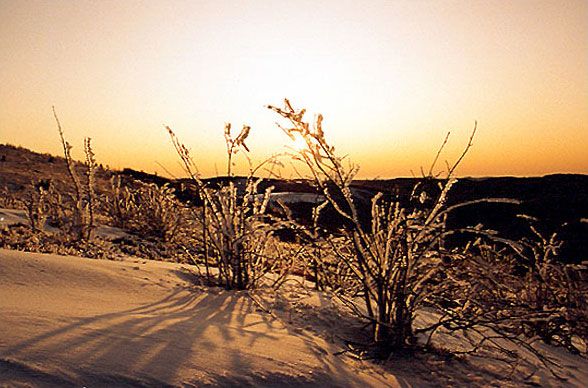
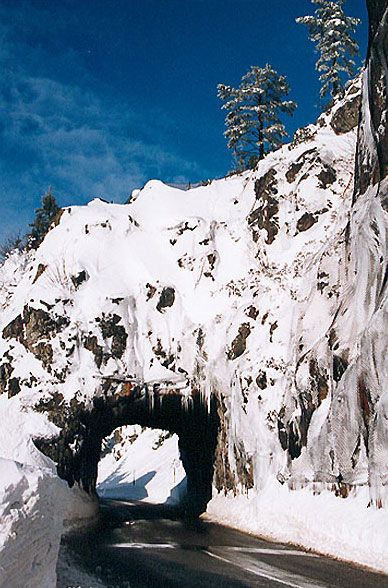
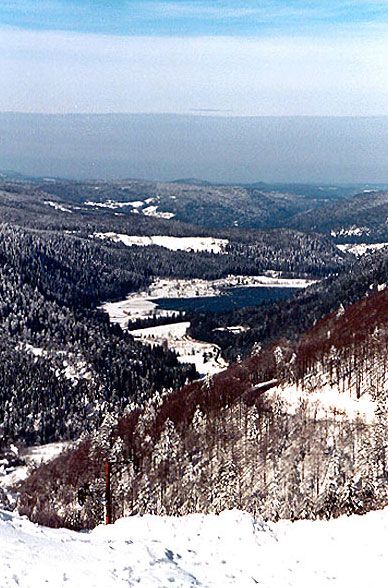
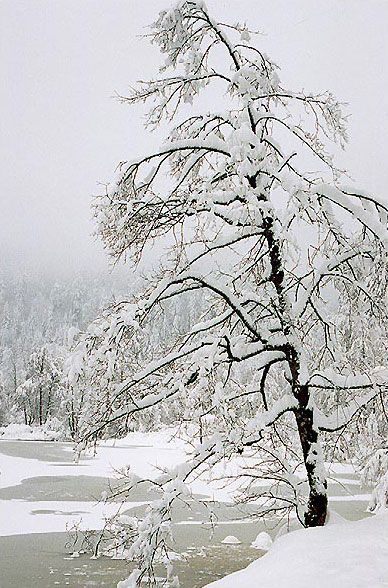
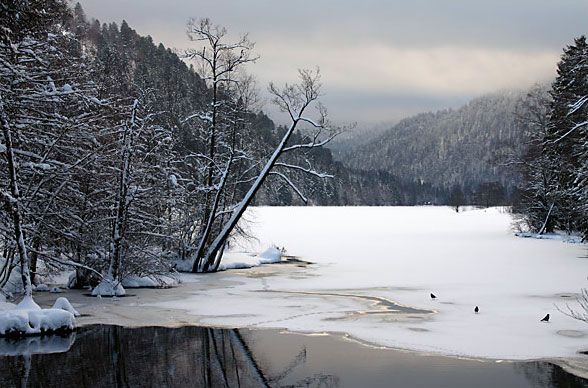
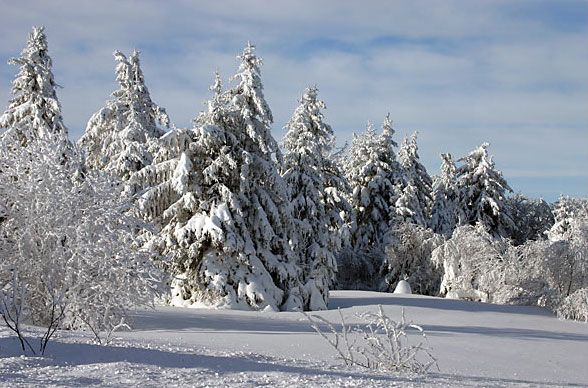
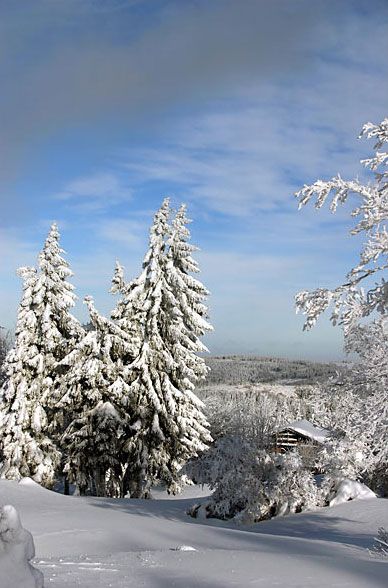
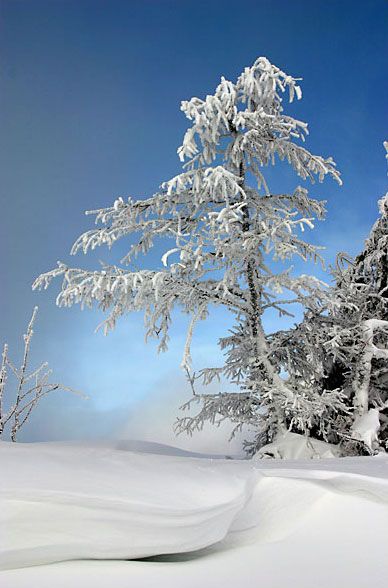
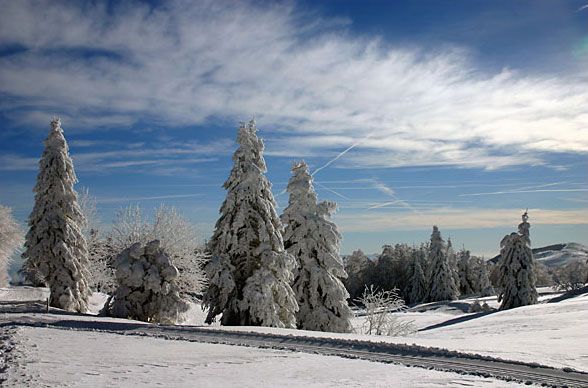
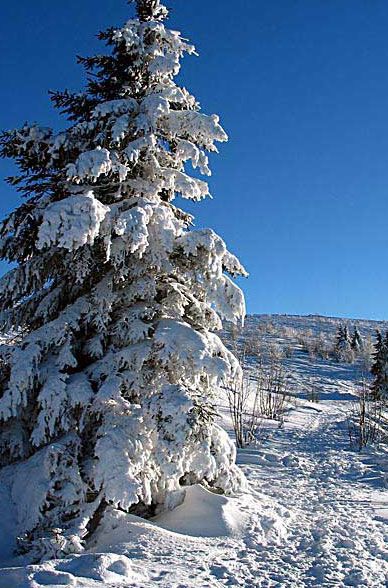
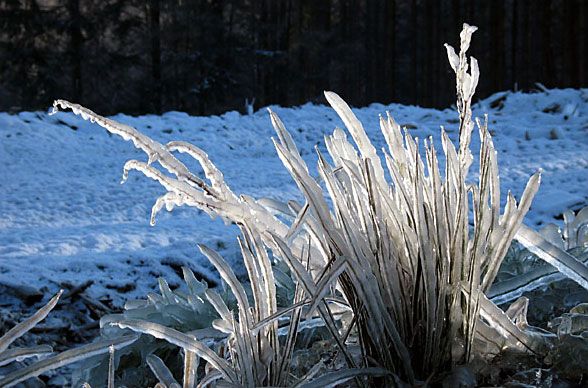
Hiver